Your Contractor Abandoned the Renovation. Here Is What to Do (Malaysia, 2026)
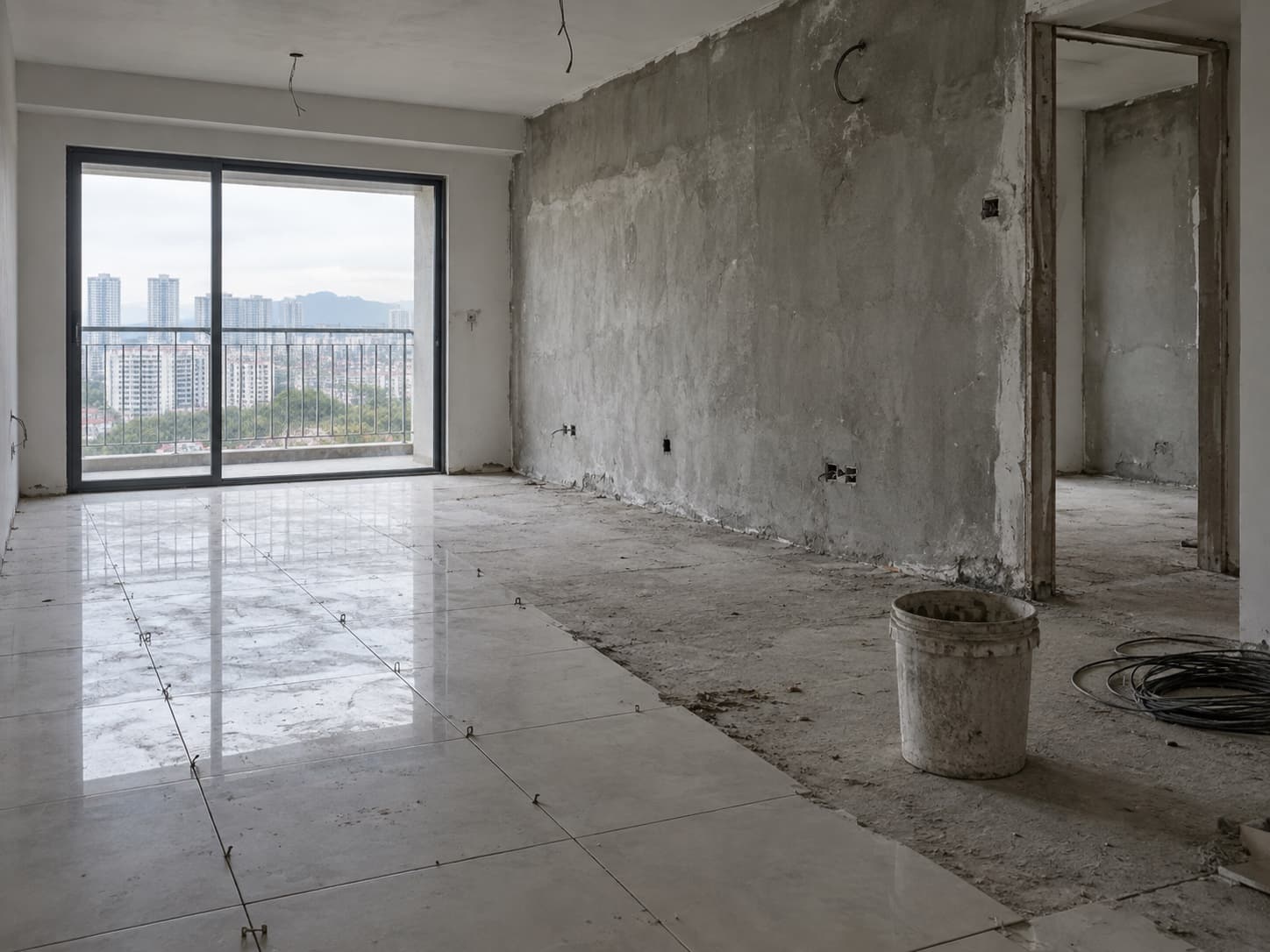
The site has been quiet for two weeks. The tools are gone, the half-hacked wall is still a half-hacked wall, and your WhatsApp messages sit on two grey ticks that never turn blue. The deposit? Long transferred. If you are reading this, your contractor has stopped showing up and you are staring at an unfinished home wondering what your options actually are.
This post is not here to say sorry. It is a sequence of actions, in the order you should do them: what to lock down today, how to put the breach in writing, when to take it to the Consumer Claims Tribunal, who to report the contractor to, and how to get the job finished. Do them in order. The steps early in the list are what make the later ones work.
One thing upfront: this is not legal advice. It is a practical map of the routes available to a Malaysian homeowner. For a straightforward dispute the tribunal route below is usually enough on its own. But if a large sum is on the line, or the contractor is a company that has folded, get a lawyer involved early. Paying for an hour of proper advice is cheaper than chasing the wrong remedy for six months.
First 48 Hours: Stop Paying, Start Documenting
What you do in the first two days decides everything that comes after. Every later step, the demand letter, the tribunal claim, the police report, runs on evidence, and evidence is easiest to gather now, while the site is untouched and your memory is fresh. Treat the next 48 hours as documentation work, not negotiation. Do not wait for the contractor to "explain first".
- •Do not make any further payment, whatever reason is given.
- •Photograph and video every part of the site, dated, from multiple angles.
- •Export the full WhatsApp chat history (with media) and keep the original phone.
- •Gather the quotation, contract, invoices, receipts and bank transfer records into one folder.
- •Write a dated timeline of what was promised and what happened, while you still remember.
- •Note the exact legal name on the receipts and on the contract. They may differ, and that matters later.
Send a Formal Notice in Writing
Before you file anything, put the breach in writing. This is a letter of demand: a dated notice that states plainly what was agreed, what you paid, what has not been done, and a firm deadline (usually 7 to 14 days) for the contractor to either resume work or refund you. Send it on WhatsApp so it is timestamped, and follow up with email or registered post to the address on the contract.
Do not write it expecting a reply. Half the time you will not get one. The point is the record: every tribunal officer and every court will ask whether you gave the contractor a chance to remedy the breach in writing, and this letter is your answer. Keep it factual and unemotional. It should contain:
- •Your name, the contractor's registered name, and the project address.
- •The contract or quotation date, and the total agreed amount.
- •Every payment made, with dates and amounts, and the total paid so far.
- •A clear description of the work left unfinished or done defectively.
- •A firm deadline (7 to 14 days) to resume work or refund, and what you will do if they do not: file with the Consumer Claims Tribunal and report them to the relevant authorities.
- •The date, and your signature.
The Consumer Claims Tribunal: Cheap, Fast, and Built for This
Tribunal Tuntutan Pengguna Malaysia
The Consumer Claims Tribunal (Tribunal Tuntutan Pengguna Malaysia) is built for exactly this situation. It hears consumer claims against businesses up to RM50,000, you file it yourself with a nominal filing fee, and you are not allowed to bring a lawyer, which keeps it cheap and fast for both sides. Hearings are typically scheduled within weeks rather than the months a civil suit takes.
There is one condition that matters: it is a consumer claiming against a trader, so the contractor has to be a business, not just a random individual. This is exactly why you noted the registered name on your receipts and contract in the first 48 hours. Bring everything from that folder to the hearing: the contract, the itemised quotation, proof of every payment, the dated photos, the WhatsApp history, and your letter of demand. A well-documented claim is hard for a no-show contractor to argue against, and awards from the tribunal are enforceable like a court order.
Be realistic about what "enforceable" buys you. The tribunal can order the contractor to refund you or finish the work, but it does not collect the money for you. If the contractor has genuinely vanished or emptied the company account, an order in your hand is not the same as cash in your bank. It is still worth doing: the order is what lets you pursue enforcement afterwards, and it is a formal finding you can point to. Just go in knowing the order is the start of recovery, not the end of it.
Above RM50,000, or Against a Company That Has Folded
If your loss is above RM50,000, the tribunal cannot hear it and you are into civil claim territory: a lawyer's letter of demand, then a suit if that goes nowhere. At that scale the legal fee is worth it, because the sums justify it and the process is unforgiving of DIY mistakes. Get advice before you file, not after.
There is a harder case to be honest about. If the contractor operates as a Sdn Bhd and that company has been wound up or is an empty shell, recovery is genuinely unlikely, whatever the paper says you are owed. A company is a separate legal person, and once it has no assets an order against it collects nothing. Better to know that early and decide how much more time and money is worth spending, than to pour good money after bad chasing a company that is already gone.
Report to KPKT, CIDB and the Police
Reporting the contractor is partly about your own case and partly about the next homeowner. Someone who did this to you is almost certainly doing it to others, and a paper trail across these channels is what eventually stops them.
- •KPKT (Ministry of Housing and Local Government): the consumer complaints channel for home renovation disputes.
- •CIDB: if the contractor claimed CIDB registration, a complaint can affect their standing. Check the registration first on the [CIDB Verification Tool](/cidb-verify).
- •Police report: essential if there is evidence of intent to defraud (fake company, fake address, multiple victims). A police report is also often required by the tribunal or a bank.
- •Your bank: if any payment was by card or a very recent transfer, ask about recall. Do not expect much, but ask immediately.
Getting the Job Finished
Once the recovery process is moving, you still have an unfinished home to deal with. A new contractor will want to inspect what is there before quoting, and will often want to redo parts of the existing work rather than build on top of quality they cannot vouch for. That is not them padding the bill; it is them refusing to warranty someone else's shortcuts. Expect it, and expect it to be priced as a line item you can actually see.
Brief the new contractor honestly. Tell them the previous job was abandoned, show them the documentation, and let them assess it with their eyes open. Then do the things that would have protected you the first time: get at least three quotes, insist on a written contract, and tie payment to a milestone schedule so no one is ever holding a big lump of your money for work not yet done. Our guide to a safer payment schedule walks through how to structure it.
Final Thoughts
The order matters more than any single step: document, notify, file, report, rebuild. Lock down the evidence in the first 48 hours, put the breach in writing, take it to the Consumer Claims Tribunal if it is within RM50,000, report the contractor to KPKT, CIDB and the police where it fits, and only then focus on getting the job finished. Skip the early steps and the later ones lose their teeth.
None of this is fun, and some of it you may not fully recover from. But acting fast and in order is the difference between a bad experience you can put behind you and a loss that drags on for a year. When you are ready to find a contractor to finish the job, get a free quote from verified contractors on FindContractor, and check any contractor's registration on our CIDB Verification Tool before you pay a deposit.
Frequently Asked Questions
Can I get my deposit back if the contractor disappears?
Sometimes. The Consumer Claims Tribunal can order a refund for claims up to RM50,000 and the process is cheap and quick. Collecting on that order is the hard part if the contractor has genuinely vanished, which is why documenting everything and acting fast matters.
How much does it cost to file with the Consumer Claims Tribunal?
A nominal filing fee, and you do not need a lawyer. It is designed for exactly this kind of dispute.
Should I make a police report against my contractor?
If there are signs of deliberate fraud, such as a fake company, false address or other victims, yes, and do it early. For a plain breach of contract without fraud, the tribunal is the primary route, though a police report can still support your claim.
Will a new contractor finish someone else's work?
Usually, after inspecting it. Expect them to want to redo parts they cannot vouch for, and expect to pay for that. Be upfront about the situation; a good contractor will price it honestly.
Related Articles


Ready to Start Your Project?
Get quotes from verified contractors, or browse reviews and transparent pricing on FindContractor.