Interior Designer vs Contractor in Malaysia: Which Costs More and Why (2026)
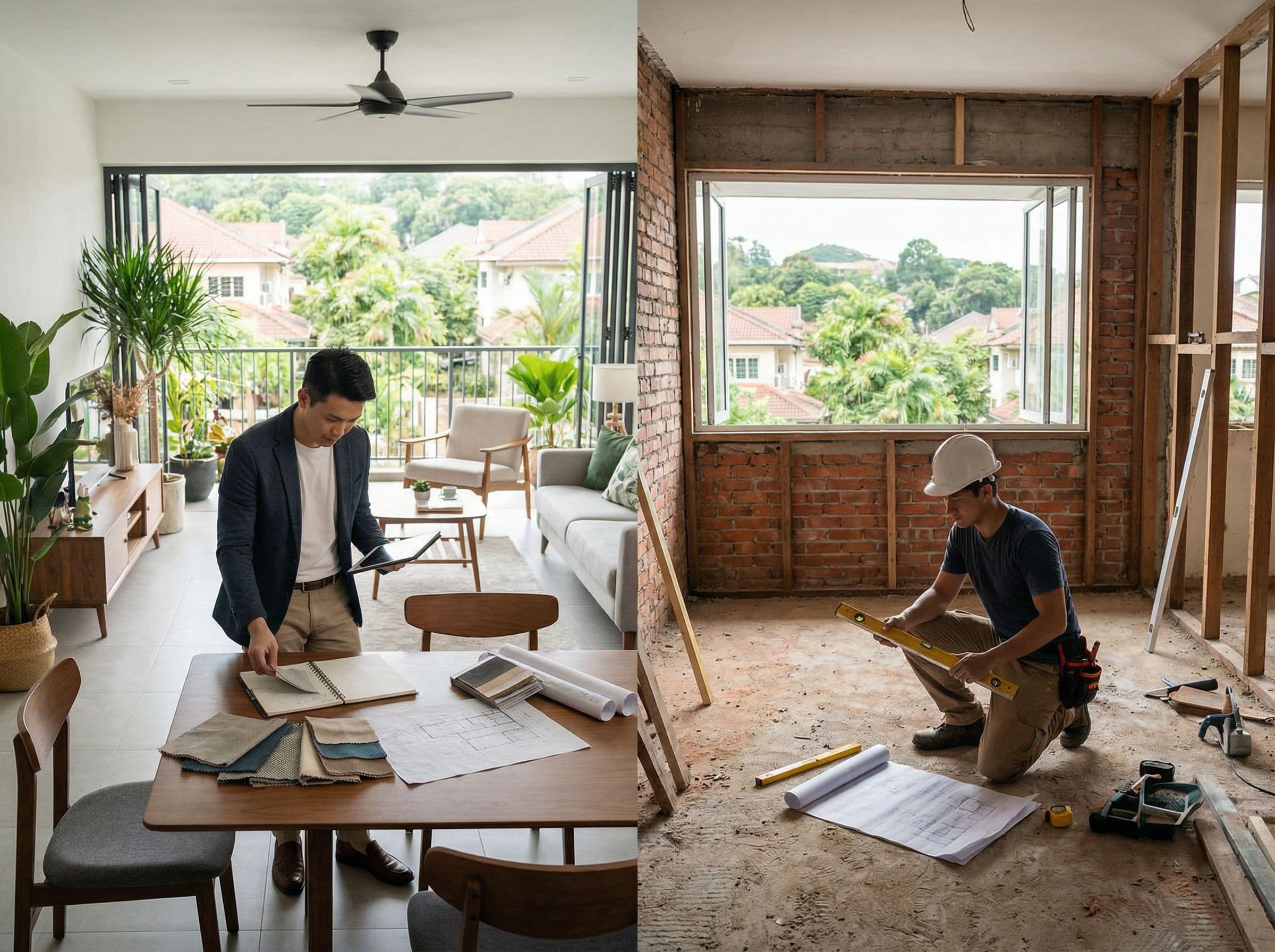
You've got your new condo keys in hand, your Pinterest board is overflowing with ideas, and now comes the big question every Malaysian homeowner asks: should you hire an interior design (ID) firm, or go directly to a renovation contractor?
It's the most debated topic in Malaysian renovation Facebook groups, Lowyat forums, and WhatsApp family chats. And the root of the debate almost always comes back to one thing: money. Interior design firms are widely perceived as expensive middlemen who charge hefty markups on the same work a contractor can do for less. But is that perception accurate, or is there more to the story?
This guide breaks down exactly how ID firms and contractors charge, what the real cost difference looks like, and helps you decide which route actually makes sense for your situation and budget.
How Interior Design Firms Charge in Malaysia
Understanding the Fee Structure
The first thing to understand is that ID firms don't just charge for construction work. You're paying for multiple layers of service, and each layer has a cost.
Typical ID firm fee structure:
1. Design Fee (RM3,000 to RM15,000+)
This covers consultation, space planning, 3D renders, material selection, and detailed drawings. Some firms charge a flat rate, others charge per square foot (RM3 to RM10/sqft). A few waive this fee if you sign the renovation contract with them.
2. Project Management Fee (8% to 15% of total renovation cost)
This covers site supervision, coordinating subcontractors, managing timelines, handling permits (especially for condos), quality checks, and being your single point of contact throughout the project.
3. Material Markup (20% to 40% above retail)
ID firms purchase materials on your behalf and apply a margin. This is where the biggest chunk of "extra cost" sits, and it's the part that makes most homeowners uncomfortable.
4. Renovation/Construction Cost
The actual construction work (hacking, tiling, carpentry, electrical, plumbing, painting) is typically subcontracted to workers or smaller contractors. The ID firm manages and oversees the quality.
In total, hiring an ID firm typically costs 30% to 60% more than going directly to a contractor for the same scope of work. That's a significant premium, and you need to understand what you're getting in return.
How Direct Contractors Charge
A Leaner Cost Structure
A renovation contractor charges a simpler structure:
Typical contractor fee structure:
1. Material Cost + Markup (10% to 25%)
Contractors also mark up materials, but typically less than ID firms because there are fewer overheads to cover. Some contractors allow you to supply your own materials (known as "owner supply") to save even more.
2. Labor Cost
Charged per trade (carpentry, tiling, plumbing, electrical, painting) either as a daily rate or per-unit rate. This is usually transparent and itemized in a proper quotation.
3. Profit Margin (10% to 20%)
Built into the overall quotation. This is their business profit on top of material and labor costs.
There is no separate design fee or project management fee. What you see in the quotation is generally what you pay. The tradeoff is that you take on more of the design, decision-making, and coordination work yourself.
Real Cost Comparison: Same Condo, Two Approaches
Putting Real Numbers Side by Side
Let's compare the cost of renovating a typical 1,000 sqft condo in the Klang Valley with the same scope of work.
Scope: Full renovation including kitchen cabinets, 2 bathroom overhauls, built-in wardrobes for 2 bedrooms, living room TV console and feature wall, full house flooring, painting, and electrical rewiring.
Route A: Interior Design Firm
Route B: Direct Contractor
Difference: RM37,000 (approximately 43% more with the ID firm)
These are realistic mid-range figures for 2026 in the Klang Valley. The exact gap varies depending on the ID firm's pricing tier and the contractor's rates, but a 30% to 50% difference is what most homeowners report.
Where the Markup Actually Goes
It Is Not All Profit
Before we vilify ID firms, it helps to understand why their prices are higher. Not all of it is pure profit.
What the premium covers:
Showroom and operations overhead
ID firms maintain showrooms, design studios, and office spaces. They employ salaried designers, project managers, and admin staff. These fixed costs get passed on to clients. A solo contractor working from home has a fraction of these expenses.
Design expertise and planning
A good ID firm prevents costly mistakes. They plan spatial flow, lighting design, material coordination, and ergonomics. They create detailed 3D renders so you can visualize the result before committing. This planning saves money on changes during construction.
Project coordination
The ID firm coordinates between multiple subcontractors (carpenter, tiler, plumber, electrician, painter), manages scheduling, handles condo management paperwork, arranges material deliveries, and ensures each trade's work aligns with the design.
Quality control
Regular site visits, progress checks, and accountability for the final result. If something doesn't match the agreed design, the ID firm is responsible for fixing it.
Warranty and accountability
ID firms typically offer a single-point warranty. If the cabinet hinge fails, you call the ID firm, not the carpenter. They handle the coordination. With a direct contractor, warranty claims can become a finger-pointing exercise if multiple parties are involved.
That said, not all ID firms deliver on these promises. Some charge premium prices but outsource everything and barely visit the site. The markup is only justified if the service is actually delivered.
When Hiring an ID Firm Is Worth It
Situations Where the Premium Pays Off
An ID firm makes sense in specific scenarios:
1. You have zero time to manage the project
If you're working long hours, traveling frequently, or simply cannot be available for site decisions, an ID firm takes that burden off you. Managing a renovation yourself realistically requires 5 to 10 hours per week for 2 to 3 months. Not everyone has that time.
2. Your design is complex or highly customized
Open-plan layouts, concealed lighting systems, custom joinery with integrated appliances, mixed-material feature walls. These need detailed planning and coordination that most standalone contractors won't provide.
3. You want a cohesive design language
If the overall aesthetic and how every element ties together matters to you (colors, textures, lighting, furniture placement), a designer adds value that a contractor typically won't offer.
4. Your property is high-value
For properties above RM800,000, the cost of renovation mistakes is high. A design error on a premium marble feature wall can cost RM10,000 to RM20,000 to redo. Professional planning reduces this risk.
5. You have a generous budget
If your total renovation budget is RM150,000 or above and the premium doesn't cause financial strain, the convenience and design quality from a good ID firm can be worth it.
When Going Direct to a Contractor Makes More Sense
Saving 30% to 50% Without Sacrificing Quality
For the majority of Malaysian homeowners, hiring a contractor directly is the smarter financial decision. Here's when it clearly makes sense:
1. You have a tight budget (under RM100,000)
When every RM5,000 matters, the 30% to 50% ID firm premium is money better spent on higher-quality materials or additional scope.
2. Your renovation is straightforward
Standard kitchen cabinets, bathroom overhaul, wardrobe installation, flooring, and painting. These are well-established scopes that any experienced contractor handles routinely without needing a designer.
3. You know what you want
If you've done your research, have reference photos, know your material preferences, and can make decisions confidently, you don't need someone to design for you.
4. You can commit time to manage the project
Being available for weekly site visits, responding to contractor questions, making material selections, and tracking progress. If you can do this, the project management fee is money saved.
5. You've found a reliable, experienced contractor
A good contractor with a strong portfolio, clear communication, and proper documentation can deliver results comparable to an ID firm's subcontractors, because in many cases they are the same subcontractors.
The Hybrid Approach: Best of Both Worlds
Pay for Design, Save on Execution
There's a middle ground that more Malaysian homeowners are discovering: hire a designer for the design only, then engage a contractor for execution.
How it works:
Step 1: Hire a freelance interior designer or small design studio
Pay RM3,000 to RM8,000 for a complete design package including space planning, 3D renders, material specifications, and detailed drawings with measurements. This is known as "design-only" or "design consultation" service.
Step 2: Take the design package to contractors for quotation
Because you have detailed drawings and material specs, contractors can quote accurately. You compare 3 to 5 quotes for the exact same scope.
Step 3: Hire the best-value contractor to execute
You manage the project using the designer's drawings as the reference. Some designers also offer site visit supervision for an additional RM1,500 to RM3,000 (a few visits during critical stages).
Potential savings:
Using the earlier example, you might spend RM6,000 on design + RM90,000 on a contractor = RM96,000 total. That's RM28,000 less than the full ID firm route, while still getting professional design.
Where to find design-only services:
How to Spot an Overcharging ID Firm
Red Flags That the Markup Is Excessive
Not all ID firms charge fairly. Here's how to identify when you're being overcharged:
Red flags:
What to do:
Questions to Ask Before Hiring Either Option
Your Due Diligence Checklist
Whether you go with an ID firm or a contractor, ask these questions before committing:
For Interior Design Firms:
For Contractors:
The Bottom Line: What Should You Do?
Here's the honest breakdown:
Choose an ID firm if:
You value convenience, have a complex design vision, your budget allows for the premium, and you genuinely cannot manage the project yourself. Budget an additional 30% to 60% over what a direct contractor would charge.
Choose a direct contractor if:
Your renovation scope is standard, you're budget-conscious, you can invest time in managing the project, and you have a clear idea of what you want. You'll save RM20,000 to RM80,000 on a typical Malaysian home renovation.
Choose the hybrid approach if:
You want professional design quality without the full ID firm markup. Pay for design separately, then engage a contractor for execution. This gives you the best balance of design quality and cost savings.
Regardless of which route you choose, the most important factor is finding someone trustworthy, transparent, and accountable. An expensive ID firm with bad project management is worse than an affordable contractor who communicates well and delivers on promises.
Final Thoughts
The ID firm vs contractor debate in Malaysia ultimately comes down to what you value more: convenience and design expertise, or cost savings and control. Neither option is universally better. The right choice depends on your budget, your time, the complexity of your renovation, and how hands-on you want to be.
What matters most is going in with your eyes open. Now that you understand exactly how each option charges and where the markup goes, you can make a decision based on facts rather than fear.
Looking for trusted contractors with transparent pricing? Browse verified contractor profiles and read real homeowner reviews on FindContractor to compare your options with confidence.
Frequently Asked Questions
How much more expensive is an interior design firm compared to a contractor in Malaysia?
On average, an ID firm costs 30% to 60% more than a direct contractor for the same scope of work. For a typical condo renovation costing RM80,000 to RM90,000 with a contractor, an ID firm would charge RM110,000 to RM140,000. The premium covers design services, project management, and material markups.
Do interior design firms in Malaysia use their own workers or subcontract?
Most ID firms in Malaysia subcontract the actual renovation work to independent carpenters, tilers, plumbers, electricians, and painters. Very few ID firms have in-house construction teams. This means you are essentially paying the ID firm to manage the same type of workers a direct contractor would use.
Can I negotiate the markup with an interior design firm?
Yes, markups are negotiable. You can ask for itemized material pricing, request to supply your own materials for certain items (owner supply), or negotiate the project management percentage. Some firms are open to a fixed design fee with lower material markups. Always get revised terms in writing.
Is it risky to hire a contractor without an interior designer?
Not if you do your homework. Choose a contractor with a strong portfolio, verified SSM registration, clear communication, and proper documentation. The risk increases only when you hire blindly without checking references or getting proper quotations. Many beautiful Malaysian homes were renovated with contractors directly.
What is the hybrid approach to renovation in Malaysia?
The hybrid approach means hiring a freelance designer or design studio for the design only (space planning, 3D renders, material specs) for RM3,000 to RM8,000, then taking those designs to contractors for competitive quotation. This gives you professional design at roughly 25% to 35% less than the full ID firm route.
How do I know if an interior design firm is overcharging me?
Request a fully itemized quotation with material brands and unit prices listed separately. Cross-check material prices at retail stores or online. If the quoted price for a specific material is more than 40% above retail, the markup may be excessive. Also compare the total cost with 2 to 3 contractor quotations for the same scope.
Related Articles


Ready to Start Your Project?
Get quotes from verified contractors, or browse reviews and transparent pricing on FindContractor.