5 Renovation Scams in Malaysia You'll Wish You Knew Sooner (2026)
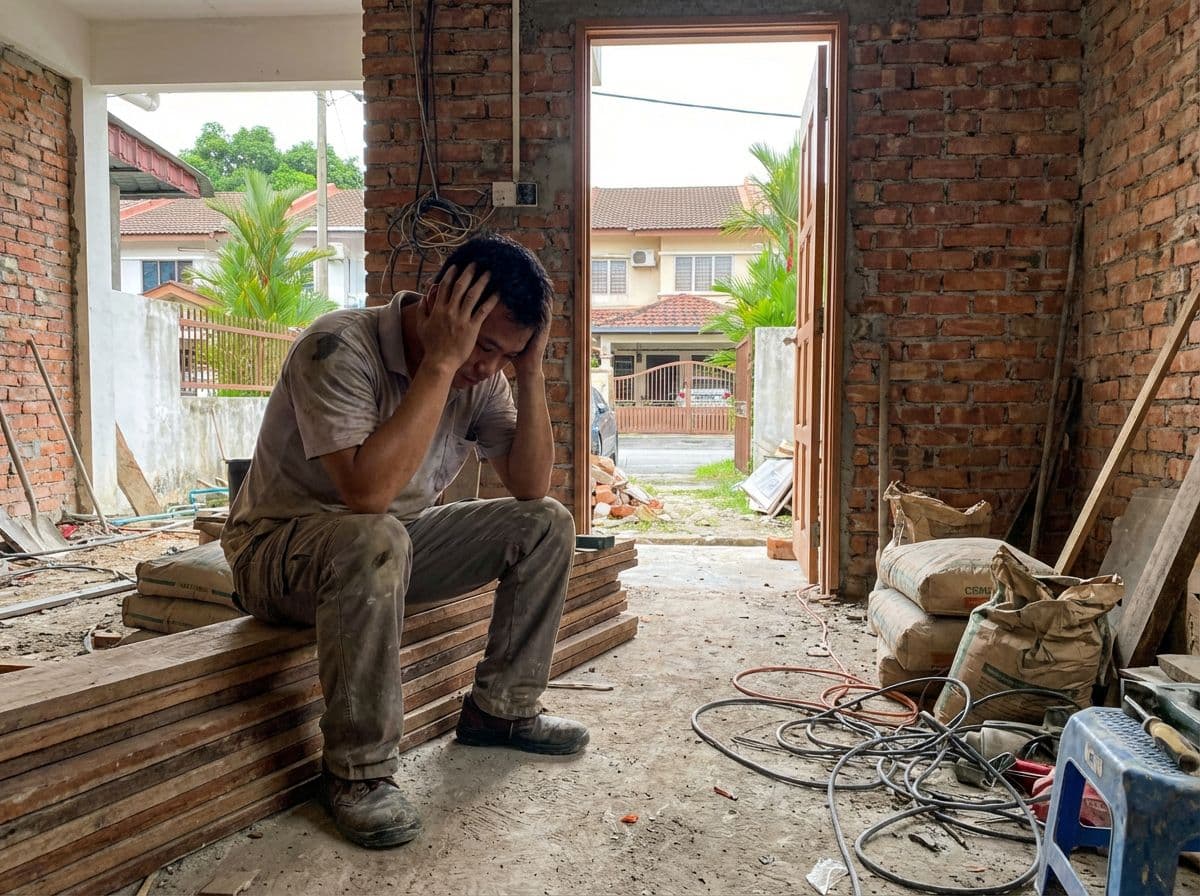
Every year, thousands of Malaysian homeowners kena scammed during renovation. The stories are all over Facebook groups, forums, and news sites lah: contractor collects a big deposit then cabut, the finished work looks nothing like what was promised, or hidden charges suddenly appear out of nowhere after the project starts.
The worst part? Most of these scams are totally avoidable. The tactics are well-known and repeat themselves year after year. But homeowners keep falling for them because they don't know what to look for until it's too late.
This guide exposes the 5 most common renovation scams happening in Malaysia right now, shows you exactly how they work, and gives you practical steps to protect yourself. If you're planning a renovation in 2026, read this before you sign anything or transfer a single ringgit.
Scam #1: The Deposit Disappearing Act
They Take Your Money and Vanish
This one is the most jialat and most common renovation scam in Malaysia. The pattern is almost always the same:
How it works:
1. You find a contractor online or through someone's recommendation. They look legit. Nice website, active social media, maybe even got showroom some more.
2. They give you a competitive quotation, sometimes suspiciously lower than other quotes you've received.
3. They pressure you to "lock in the price" by paying a large upfront deposit, typically 40% to 60% of the total project cost.
4. After receiving the deposit, communication starts to slow down. They give excuses: "materials delayed lah," "workers busy on another site," "permit still pending."
5. Eventually, they stop responding entirely. Your money gone just like that. Phone number disconnected or blocked. Social media page poof, disappeared.
Real numbers: Victims typically lose RM15,000 to RM80,000 in deposit fraud. Some cases reported to Tribunal Tuntutan Pengguna involve losses exceeding RM100,000. That's not a small amount ok.
How to protect yourself:
- •Never pay more than 10% as an initial deposit. A legit contractor can start work with a 10% deposit. If they insist on 40% to 60% upfront before any work begins, just walk away lah.
- •Structure payments in milestones tied to completed work stages (e.g., 10% deposit, 20% after hacking and tiling, 25% after carpentry, 25% after electrical and painting, 20% upon completion and handover).
- •Verify SSM registration. Search the company name on the SSM e-Info portal (www.ssm-einfo.my). If they are not registered, do not hire them.
- •Check for a physical office or workshop. Scam operators usually don't have a fixed address one.
- •Never transfer deposits to personal bank accounts. Insist on paying to the registered business account that matches the SSM company name.
Scam #2: The Bait-and-Switch Quotation
Low Quote to Win the Job, Then Costs Explode
This scam is more subtle and often harder to prove. The contractor doesn't disappear. They stick around, but your final bill ends up 50% to 100% more than the original quotation. Confirm kena mark up like nobody's business.
How it works:
1. The contractor gives you a very attractive low quotation to beat competitors and win the job.
2. The quotation is deliberately vague. Line items use generic descriptions like "kitchen cabinets" or "bathroom renovation" without specifying materials, brands, dimensions, or unit prices.
3. Once work begins and you've already paid the deposit, the "surprises" start:
- "Eh, this wall got hidden wiring, rewiring will cost extra RM3,000."
- "The tiles you want are not included in the quotation. That one additional RM5,000."
- "We need to hack deeper than expected. Additional hacking charges: RM2,500."
4. You're trapped. Work is half-done, your home looks like a war zone, and switching contractors mid-project is super expensive and mafan.
5. You end up paying the inflated costs because you got no other choice.
Why it works: Malaysian homeowners often compare quotations only on the bottom-line total without checking what is actually included. A RM60,000 quotation that excludes hacking, electrical, plumbing, and specific material grades is not cheaper than an RM80,000 quotation that includes everything. Don't just look at the final number lah.
How to protect yourself:
- •Demand a fully itemized quotation. Every line item should specify: scope of work, material brand and model, quantity, unit price, and total. If a contractor refuses to itemize, confirm they are hiding something.
- •Compare quotations on scope, not just price. Ensure every quotation you compare covers the exact same materials and work scope.
- •Ask explicitly: "What is NOT included in this quotation?" Get the exclusions in writing.
- •Include a clause in the contract that limits variation orders (additional charges) to a maximum of 10% of the original quotation without your written approval.
- •Be suspicious of any quotation that is significantly cheaper (20%+ lower) than all other quotes. Too cheap until cannot believe? Then don't believe lah.
Scam #3: The Fake Portfolio and Reviews
Stolen Photos, Bought Testimonials
Nowadays ah, a professional-looking Instagram page or Facebook portfolio is so easy to fake. Some scam contractors build their entire reputation on stolen work photos and bought reviews.
How it works:
1. The contractor's social media or website shows off impressive renovation photos, but the work was actually done by other contractors. They simply download photos from Pinterest, other contractors' pages, or stock photo sites. Senang je.
2. Their Google reviews or Facebook reviews are suspiciously positive, like dozens of 5-star reviews with generic comments like "Great work, highly recommended!" all posted within a short time frame.
3. Some even create fake "satisfied customer" testimonials with stock photos of people who don't exist.
4. You hire them based on this fake portfolio, and the actual quality of their work? Langit dan bumi compared to what was advertised.
Red flags to watch for:
- •All portfolio photos have different styles, lighting, and quality, which means they were taken by different people (or downloaded from different sources).
- •No progress photos or behind-the-scenes shots. Legit contractors often share work-in-progress content. Scammers only have finished "hero shots." Very sus.
- •Google Reviews posted in suspicious clusters. For example, 15 reviews in one week, then silence for months.
- •Reviewer profiles with no other reviews, no profile photo, or generic names.
- •They cannot provide the address or owner contact for any project in their portfolio for you to verify.
Scam #4: The Substandard Materials Swap
You Pay for Premium, They Install Budget
This scam happens during the project and is often only discovered months or years later when things start rosak one by one.
How it works:
1. Your quotation specifies quality materials: branded tiles, solid plywood cabinets, genuine quartz countertops, reputable paint brands.
2. The contractor agrees to everything. Work proceeds. On the surface, everything looks fine.
3. Behind the scenes, they swap in cheaper alternatives:
- Quartz countertop replaced with low-grade engineered stone that chips and stains within months.
- Marine plywood replaced with chipboard or low-grade MDF that kembung when exposed to moisture.
- Branded tiles replaced with unbranded lookalikes from who-knows-where.
- Genuine Nippon or Dulux paint replaced with cheap, unbranded paint that fades super fast.
4. You don't notice immediately because the finished work looks similar. But within 6 to 18 months, cabinets warp, paint peels, countertops stain, and tiles crack. That's when you know you kena already.
5. By then, the "warranty" has conveniently expired or the contractor is unreachable.
The financial impact: You paid for RM25,000 worth of kitchen cabinets but received RM12,000 quality. Multiply that across every element of your renovation. Sakit hati right?
How to protect yourself:
- •Specify exact material brands, models, and grades in the contract. Not just "quartz countertop" but "Caesarstone 5143 White Attica, 20mm thickness."
- •Request material receipts or delivery orders. When materials arrive on site, check that the brands match what was specified.
- •Visit the site during material delivery and installation. Take photos of material labels and packaging before they are discarded.
- •For cabinets, ask to see a cross-section of the carcass material. Plywood has visible layers; chipboard and MDF look completely different.
- •Include a contract clause that allows you to reject and demand replacement of any materials that do not match specifications, at the contractor's cost.
Scam #5: The Never-Ending Renovation
Deliberate Delays to Extract More Money
Some contractors don't scam you with one big hit. Instead, they slowly squeeze you dry through endless delays and excuses that always seem to need more money.
How it works:
1. Work starts on time and progresses well for the first 2 to 3 weeks. This builds your confidence and trust. You think, "Wah, this contractor quite on the ball."
2. Then the delays begin. Workers stop showing up. The contractor blames supply chain issues, weather, other projects, or worker shortages.
3. The contractor asks for the next payment milestone early: "Boss, we need to order the materials for the next phase. Can release the payment first so no delay?"
4. You pay, hoping it speeds things up. Spoiler: it doesn't. More delays follow.
5. The pattern repeats: delay → excuse → ask for early payment → delay again. Your project timeline stretches from 8 weeks to 5 or 6 months. Pengsan.
6. In some cases, the contractor eventually abandons the half-finished project. In others, they rush the final stages cincai just to move on, resulting in terrible workmanship.
Why it's effective: Once you're 60% through a project, switching contractors is painful and expensive. The new contractor has to understand what was done, fix any issues, and match the existing work. Most homeowners just tahan and endure the delays.
How to protect yourself:
- •Set clear timelines in the contract with specific start and completion dates for each phase.
- •Include a penalty clause for delays: for example, a RM200/day deduction for every day past the agreed completion date (this is standard practice and legitimate contractors will accept it).
- •Never release payments ahead of schedule, regardless of the reason. Payments should only be released when the corresponding work is verified as complete and satisfactory.
- •If delays exceed 2 weeks without a legitimate documented reason (e.g., actual supply shortage with supplier confirmation), issue a written warning and set a final deadline.
- •Document everything: take dated photos of progress, keep all WhatsApp conversations, and confirm all agreements in writing. Screenshot everything. You'll thank yourself later.
What to Do If You've Been Scammed
Your Legal Options in Malaysia
If you've already kena, don't panic. You still have options. Don't just keep quiet and accept it. Taking action not only helps you recover losses but also protects other homeowners.
Step 1: Document everything
Gather all evidence: quotations, contracts, receipts, bank transfer records, WhatsApp conversations, photos of incomplete or defective work, and any written promises made by the contractor.
Step 2: File a police report
Go to your nearest police station and lodge a report. This creates an official record and is required for some legal proceedings. Bring all your evidence.
Step 3: File a claim with the Tribunal Tuntutan Pengguna (Consumer Claims Tribunal)
For claims up to RM50,000, this is the fastest and most affordable route. Filing fee is only RM5. No lawyer is needed. The tribunal typically schedules a hearing within 60 days. The process is straightforward and designed for consumers.
Step 4: Report to KPDN (Ministry of Domestic Trade and Consumer Affairs)
File a complaint at https://e-aduan.kpdnhep.gov.my/. KPDN can investigate businesses for unfair trade practices and take enforcement action.
Step 5: Report to CIDB (Construction Industry Development Board)
If the contractor claims to be CIDB-registered, verify and report them. CIDB can revoke registrations and blacklist contractors.
Step 6: Warn others
Share your experience (with evidence) on renovation forums, Google Reviews, and social media. Help other homeowners avoid the same contractor. Just make sure you stick to facts and got evidence to back it up, so you don't kena defamation pulak.
The Verification Checklist: Before You Hire Any Contractor
Do This Every Time, No Exceptions
Use this checklist before engaging any contractor in Malaysia. It only takes 30 minutes and can save you tens of thousands of ringgit. Seriously, don't skip this.
Business verification:
- •Verify SSM registration at www.ssm-einfo.my. The company name and registration number should match their quotation.
- •Check if they are CIDB registered on the official register (registration is required for contractors doing construction work; the RM500,000 figure you may see is the CIDB levy, not a registration threshold).
- •Confirm they have a physical office, workshop, or showroom. Visit in person if possible.
- •Verify the bank account name matches the registered business name before transferring any money.
- •Search for complaints: Google their business name + "scam" or "complaint." Check Tribunal Tuntutan Pengguna records.
- •Ask for at least 3 references from recent projects (within the last 6 months). Call the references and ask specific questions about timeline, cost vs quotation, quality, and communication.
- •Request to visit a recently completed project in person. A confident contractor will happily show off their work. If they give excuse, red flag already.
- •Check their Google Reviews and look for patterns: are the reviews detailed and specific, or generic and clustered? Do reviewers have other review activity on their profiles?
- •Ensure they provide a written contract (not just a quotation) that includes scope, materials, timeline, payment schedule, warranty terms, and penalty clauses.
- •Trust your gut feeling. If something feels off, like high-pressure sales tactics, refuse to answer questions, or pricing that's too good to be true, just walk away. Plenty of legit contractors in Malaysia out there.
Final Thoughts
Renovation scams in Malaysia are not random. They follow predictable patterns that repeat year after year. The contractors change names, create new social media pages, and find new victims, but the tactics remain the same: large upfront deposits, vague quotations, fake portfolios, material swaps, and deliberate delays.
The good news? Protecting yourself doesn't require special knowledge. Just discipline. Verify before you pay. Demand itemized quotations. Structure payments around completed milestones. Check references. Get everything in writing.
If every homeowner in Malaysia followed the verification checklist in this guide, these scammers would have no business. Share this article with anyone you know who is planning a renovation. It might save them from a very expensive and stressful lesson.
One quick first step before you transfer any money: use our free CIDB Verification Tool to check whether your contractor is registered with CIDB. Unregistered operators handling significant construction work is one of the most common red flags in scam cases.
Looking for verified contractors you can trust? Browse contractor profiles with real reviews and verified business details on FindContractor to start your renovation with confidence.
Frequently Asked Questions
How much deposit should I pay a renovation contractor in Malaysia?
Never pay more than 10% of the total project cost as an initial deposit. Structure the remaining payments as milestones tied to completed work stages. For example: 10% deposit, 20% after hacking/tiling, 25% after carpentry, 25% after electrical/painting, and 20% upon final handover and inspection. Any contractor demanding 40% to 60% upfront is a major red flag.
How do I verify if a contractor is legitimate in Malaysia?
Check their SSM (Suruhanjaya Syarikat Malaysia) registration at www.ssm-einfo.my. Verify their bank account matches the registered business name. Visit their physical office or workshop. Ask for recent project references and call them. Search their business name online for any scam reports or complaints.
What can I do if my contractor ran away with my deposit in Malaysia?
File a police report immediately. Then file a claim with the Tribunal Tuntutan Pengguna (Consumer Claims Tribunal) for amounts up to RM50,000. The filing fee is only RM5 and no lawyer is needed. Also report to KPDN (Ministry of Domestic Trade) at e-aduan.kpdnhep.gov.my and CIDB if the contractor claimed to be registered.
How do I spot fake renovation contractor reviews?
Look for these red flags: reviews posted in suspicious clusters (many reviews in a short period), reviewers with no profile photo or other review history, generic praise without specific project details, and no response from the contractor to negative reviews. Ask the contractor for direct references you can contact independently.
Is a written contract necessary for renovation work in Malaysia?
Absolutely. A proper written contract should include: detailed scope of work, specific material brands and models, project timeline with start and completion dates, payment schedule tied to milestones, warranty terms, and penalty clauses for delays. A quotation alone is not enough. Insist on a formal contract signed by both parties.
Related Articles
Ready to Start Your Project?
Get quotes from verified contractors, or browse reviews and transparent pricing on FindContractor.