How to Read and Compare Renovation Quotations in Malaysia (2026 Guide)
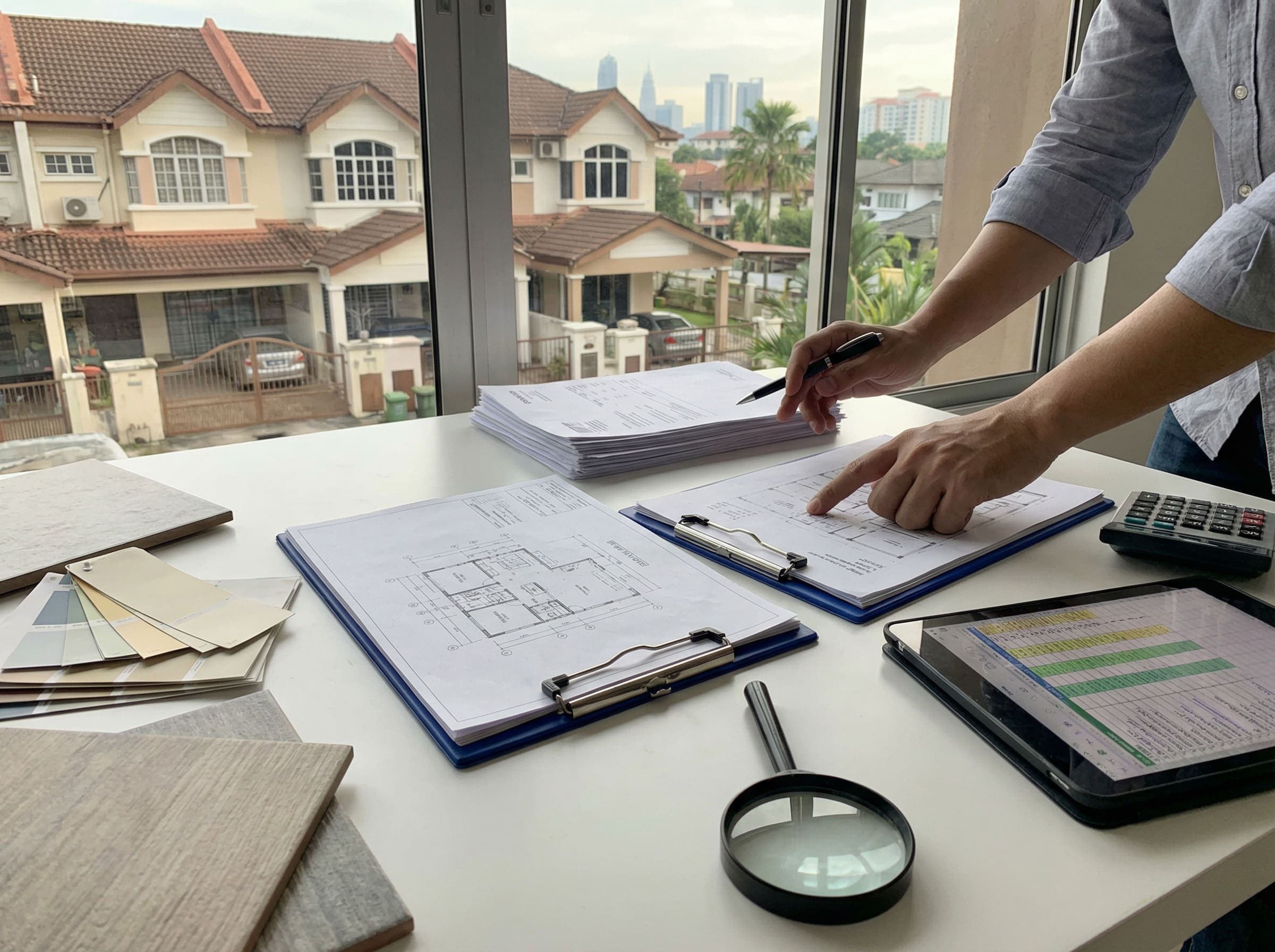
You've shortlisted three contractors and received their quotations. Now what? For most Malaysian homeowners, renovation quotations look like a confusing wall of numbers, and that confusion is exactly how overcharging and hidden costs slip through.
This guide walks you through how to read a renovation quotation line by line, spot red flags, and compare multiple quotes fairly so you can make a confident decision.
What a Proper Quotation Should Include
The Anatomy of a Good Quote
Before comparing anything, make sure each quotation you receive has these essential components:
Must-have sections:
If any quotation is missing these, ask the contractor to revise it before you even begin comparing. A vague quote is not worth your time.
Understanding Line Items
What Each Row Actually Means
A typical renovation quotation breaks work into line items. Here's how to read them:
Example line item:
Item 1.1: Hacking of existing floor tiles (kitchen)
Quantity: 120 sqft | Rate: RM4.50/sqft | Amount: RM540.00
Key things to check per line item:
Lump Sum vs Itemized: Why It Matters
Never Accept a Lump Sum Without Details
Some contractors just give you a single lump sum figure like "Kitchen renovation: RM35,000." This is a major red flag.
Problems with lump sum quotes:
What to do:
How to Compare Multiple Quotations
Apples to Apples, Not Apples to Durian
The biggest mistake homeowners make is comparing total prices. Instead, compare line by line.
Step-by-step comparison method:
1. Create a comparison spreadsheet
List all work items down the left column. Put each contractor across the top. Fill in their prices for each item.
2. Normalize the scope
Ensure all contractors are quoting for the same work. If Contractor A includes ceiling work but Contractor B does not, the total comparison is meaningless.
3. Check material specifications
"Quartz countertop" from Contractor A might be a RM180/sqft local brand, while Contractor B quotes RM350/sqft imported Caesarstone. Same item, vastly different quality and price.
4. Flag major price differences
If one contractor quotes RM8,000 for carpentry and another quotes RM15,000, find out why. Different materials? Different scope? Different quality?
5. Look at the total picture
The cheapest overall quote may be expensive on the items that matter most to you, and cheap on items where they are cutting corners.
Hidden Costs to Watch For
What Contractors Sometimes Leave Out
These are costs that often pop up AFTER you sign, either as "extras" or surprise invoices:
Commonly hidden costs:
How to protect yourself:
Ask every contractor: "Is there anything NOT included in this quotation that I will need to pay for?" Get the answer in writing.
Understanding Material Grades
Why the Same Item Can Cost 3x More
Materials account for 40–60% of your renovation cost. Understanding grades helps you evaluate quotations:
Tiles (per sqft installed):
Kitchen cabinets (per linear foot):
Countertops (per linear foot):
What to do: When a quotation says "quartz countertop," ask which brand and thickness. The difference between a RM100/sqft local quartz and RM400/sqft Caesarstone is significant.
Red Flags in Quotations
Warning Signs to Walk Away
Watch out for these warning signs in any quotation:
Immediate red flags:
Subtle red flags:
How to Negotiate Your Quotation
Smart Negotiation Without Burning Bridges
Negotiation is expected in the Malaysian renovation industry. Here's how to do it effectively:
Do:
Don't:
Before You Sign: Final Checklist
Run through this checklist before accepting any quotation:
Scope and Materials:
Commercial Terms:
Documentation:
Once everything checks out, you're ready to sign with confidence.
Final Thoughts
A renovation quotation is more than just a price tag. It's the document that protects your investment. Once you know how to read line items, spot hidden costs, and compare quotes properly, you'll be in a much better position to pick the right contractor and avoid nasty surprises.
Take the time to go through every detail, ask questions when something is unclear, and don't rush into signing.
A legitimate quotation should always include the contractor's CIDB registration number for projects of meaningful value. Use our free CIDB Verification Tool to confirm the number is valid and the contractor is graded for your project size before you commit.
Want to compare verified contractors with transparent pricing? Browse contractor profiles and real homeowner reviews on FindContractor today.
Frequently Asked Questions
How many renovation quotations should I get before deciding?
Get at least 3 to 5 quotations from different contractors. This gives you a realistic range of pricing and helps you spot outliers, whether suspiciously cheap or overpriced.
What is a provisional sum in a renovation quotation?
A provisional sum is an estimated cost for an item where the exact price has not been confirmed yet. Be careful because provisional sums can increase significantly. Try to get firm prices for all major items before signing.
Should I always choose the most detailed quotation?
A detailed quotation is a positive sign of professionalism, but detail alone does not guarantee quality work. Use the detail to compare fairly, and also check the contractor past projects, reviews, and references.
How do I know if a contractor is overcharging for materials?
Compare the same material (exact brand and model) across multiple quotations. You can also check retail prices at hardware stores or online. Contractors typically mark up materials by 15–30%, which is normal for sourcing and logistics.
Can I negotiate a renovation quotation in Malaysia?
Yes, negotiation is common and expected. Use competing quotes as leverage, ask about alternative materials, and negotiate payment terms. Always get revised prices in writing rather than accepting verbal discounts.
Related Articles

Ready to Start Your Project?
Get quotes from verified contractors, or browse reviews and transparent pricing on FindContractor.