7 Tile Mistakes in Malaysia That Make Your Home Look Cheap by Year Two (2026)
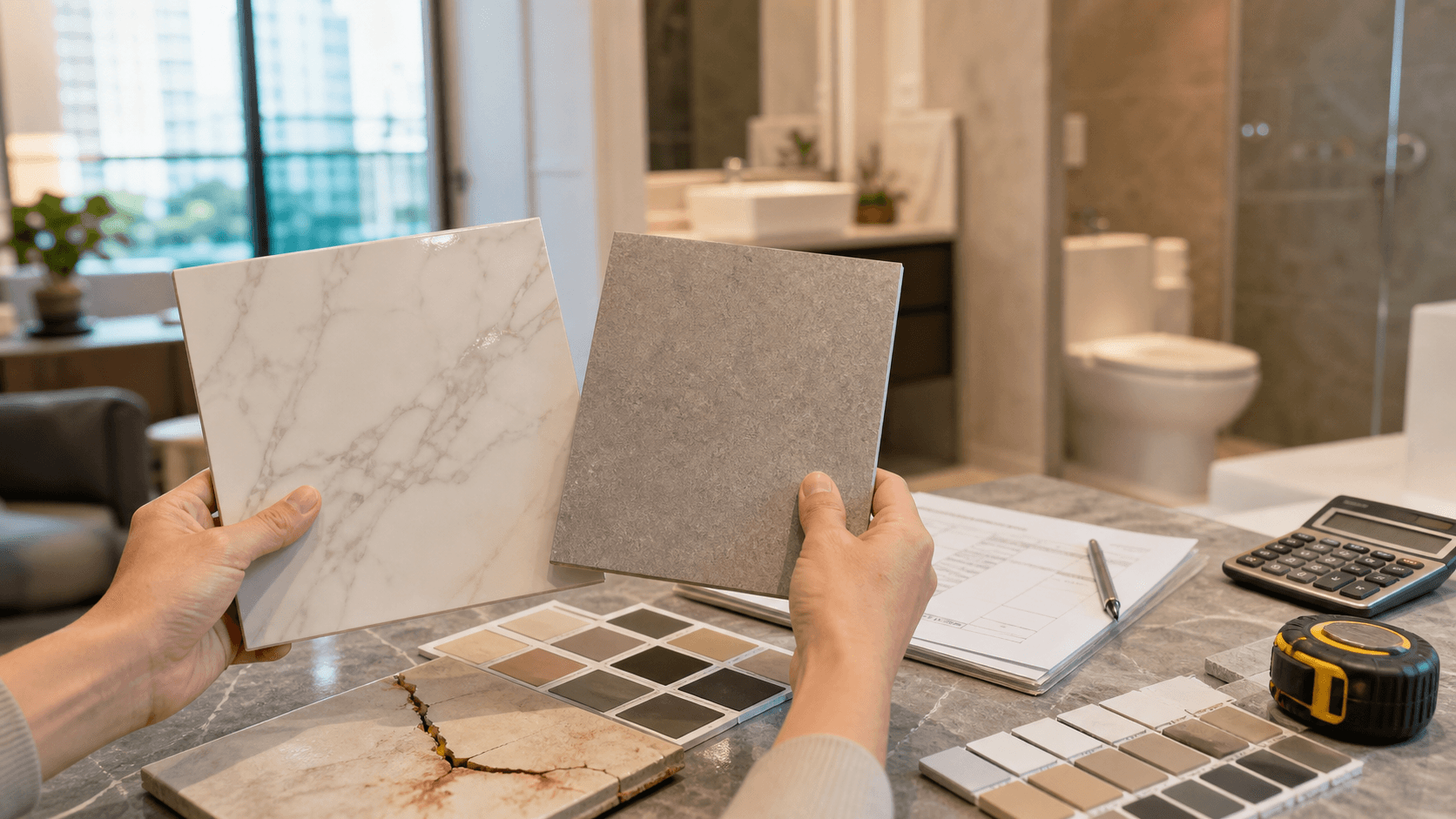
Tiles are one of the most dangerous decisions in a Malaysian renovation because they look simple in the showroom and become painfully expensive after installation.
A cabinet door can be changed. A paint colour can be repainted. A light fitting can be swapped over a weekend. But the wrong floor tile? That means hacking, dust, debris, broken skirting, damaged waterproofing, new adhesive, new labour, and another few weeks of your home looking like a construction site.
This is why tile regrets hurt so much. Homeowners usually do not regret the tile on day one. They regret it after the bathroom turns slippery, the white grout becomes black, the living room floor looks wavy under morning light, the wet kitchen stains permanently, or the contractor says, "Boss, this one not included in quote."
If you are choosing tiles for a condo, terrace house, bathroom, wet kitchen, balcony, or full home renovation in Malaysia in 2026, read this before you pay the deposit. These are the seven tile mistakes that make homes look cheap by year two, even when the renovation was not cheap at all.
Mistake #1: Choosing the Prettiest Tile, Not the Right Tile
A showroom tile is not the same as a lived-in floor
Tile showrooms are designed to make everything look good. Bright lighting, clean displays, perfect sample boards, no cooking oil, no wet slippers, no children running out of the bathroom, no elderly parents stepping onto a damp floor.
Your home is different. Malaysian homes deal with humidity, wet bathrooms, heavy cooking, dusty balconies, rain blowing into outdoor areas, and cleaning routines that are far rougher than anything a sample tile sees in the showroom.
The mistake is choosing purely by colour or pattern. A marble-look polished porcelain tile might look expensive on a showroom wall, but put it on a bathroom floor and it can become a slip hazard. A textured outdoor tile might be perfect for a balcony but annoying to mop in a bedroom. A cheap ceramic wall tile might look fine vertically, but crack if someone uses it on a floor.
Choose by function first, design second. For every tile, ask: where will it be used, will it get wet, how much foot traffic will it take, how often will it be cleaned, and what happens if it fails?
- •Living and dining floors: porcelain or homogeneous tiles are safer long-term choices than soft ceramic tiles.
- •Bathroom floors: matte, textured, smaller-format tiles with good grip. Avoid polished finishes.
- •Bathroom walls: ceramic or porcelain both work, because walls do not take foot traffic.
- •Wet kitchen floors: matte porcelain with slip resistance. Grease plus polished tiles is a bad combination.
- •Balcony and outdoor areas: exterior-rated anti-slip tiles that can handle rain and heat.
Mistake #2: Using Polished Tiles in Wet Areas
The mistake that looks expensive and feels dangerous
Polished tiles are the classic renovation trap. They look glossy, bright, and premium when dry. Then real life starts.
In a bathroom, water sits on the surface. In a wet kitchen, oil mist settles on the floor. On a balcony, rain blows in sideways. Suddenly that beautiful polished tile becomes slippery enough that everyone walks carefully without realizing it.
For Malaysian bathrooms and wet kitchens, grip matters more than shine. The floor should still feel stable when your feet are wet. This is especially important if you have children, elderly parents, or anyone in the home who may use the bathroom at night when the floor is damp.
What to ask your contractor or tile supplier: ask for matte or structured floor tiles suitable for wet areas. If they mention slip ratings, R10 is a useful minimum for kitchens and general wet areas, while shower floors and outdoor wet zones often need more grip. Even if the supplier does not use formal ratings, physically test the sample with wet fingers. If it feels slick in your hand, it will feel worse underfoot.
The clickbait version is simple: a glossy bathroom floor photographs well, but a safe bathroom floor is the one you will still be happy with at 2am when someone steps in half asleep.
Mistake #3: Picking White Grout Because It Looks Clean on Day One
White grout is a maintenance contract you did not sign
White grout is one of the fastest ways to make a renovation look fresh on handover day and tired six months later.
In Malaysian kitchens, grout deals with oil, turmeric, sambal, soy sauce, coffee, and daily mopping. In bathrooms, it deals with soap residue, hard water marks, mould, shampoo, and humidity. White grout shows everything. Once it darkens unevenly, even expensive tiles start looking cheap.
The problem is worse with small tiles because more grout lines mean more maintenance. Mosaic shower floors can be beautiful and practical for grip, but they need better grout planning. Large-format tiles have fewer grout lines, but if the grout colour is too light, every line becomes a dirt highlight.
The better choice for most Malaysian homes: use mid-tone grey, warm grey, taupe, or a grout colour that is close to the tile body. It hides normal staining, makes the floor feel calmer, and ages better. Reserve white grout for low-splash walls where you are willing to clean carefully.
Also ask what grout type is being used. Cheap grout stains faster and can crack if the substrate moves. For bathrooms, wet kitchens, and balconies, better grout and proper sealing are not luxury upgrades. They are part of making the tile job survive daily use.
Mistake #4: Falling for Large-Format Tiles Without Budgeting for Skill
Big tiles make bad installation more obvious
Large-format tiles can make a condo look bigger and more expensive. Fewer grout lines, cleaner surfaces, modern marble-look slabs, hotel-style bathroom walls. Done well, they look fantastic.
Done badly, they expose every weakness in the floor and every shortcut in the installer.
The issue is lippage, where one tile edge sits slightly higher than the next. On small tiles, minor unevenness is less obvious. On large-format tiles, especially glossy tiles, sunlight across the living room can reveal waves, shadows, raised edges, and awkward cuts. You might not notice it during handover at night. You will notice it every morning after moving in.
Large-format tiles need a flatter substrate, better adhesive coverage, careful levelling clips, more precise cutting, and installers who know what they are doing. That means labour costs more. If a contractor quotes large-format tile installation at the same rate as standard 60x60cm tiles, be careful. The missing cost may show up as poor workmanship.
Practical rule: use large-format tiles where the contractor can prove experience, especially for living rooms and feature bathroom walls. For tight bathrooms, awkward corners, floor traps, and sloped wet areas, medium or smaller tiles often perform better.
Mistake #5: Comparing Tile Quotes by Total Price Only
The cheapest quote often excludes the expensive parts
Tile quotations are easy to manipulate because the homeowner sees one number and assumes everything is included. It usually is not.
A proper tiling quote should separate the tile supply, adhesive, grout, labour, hacking, disposal, substrate preparation, waterproofing where needed, wastage, skirting, trims, and any levelling work. If the quote only says "tiling works RM8,000", you do not know what you are buying.
This is how a cheap quote becomes expensive after work starts. The contractor hacks the old tiles and discovers the screed is uneven. Extra. The bathroom needs waterproofing. Extra. The tiles need 15% wastage because of diagonal cuts. Extra. The condo requires debris disposal by approved lorry. Extra. The edge trim was not included. Extra.
Typical 2026 planning ranges in Malaysia:
Standard ceramic tiles are often the budget option. Porcelain costs more but is usually stronger and better for floors. Large-format porcelain costs more again because of tile price, handling, cutting, and installation skill. Natural stone and sintered stone can be beautiful, but they move the budget into a different category entirely.
For many Malaysian homes, the all-in supply-and-lay range often lands around RM8 to RM15/sqft for basic ceramic, RM14 to RM28/sqft for standard porcelain, and RM22 to RM55/sqft for large-format porcelain depending on wall or floor use, layout, prep, and workmanship level. Hacking, disposal, waterproofing, and levelling can add materially on top if they are excluded.
Do not ask only, "How much per square foot?" Ask, "What exactly is included in that square foot?"
- •Tile supply: brand, size, finish, grade, and batch.
- •Installation labour: floor and wall rates can differ.
- •Adhesive and grout: type and brand should be stated for wet areas.
- •Hacking and disposal: especially important in condos.
- •Waterproofing: required for bathrooms, balconies, and some wet kitchen areas.
- •Wastage: usually 10% to 15% for straight lay, more for patterns or awkward spaces.
- •Substrate preparation: levelling, screed repair, hollow tile removal, or tile-on-tile prep.
Mistake #6: Buying Tiles Too Early, Too Late, or From Mixed Batches
Tile batch problems are real and they are ugly
Tiles are manufactured in batches. Two boxes with the same model name can still have slight colour or size variation if they come from different production batches. On a full floor, that variation can show up as one patch looking slightly warmer, cooler, darker, or glossier than the rest.
This is why buying "just enough" tiles is risky. If your contractor breaks a few pieces during cutting, or if you need future repairs, the replacement batch may not match perfectly. You will either live with the mismatch or replace a larger area than expected.
Buying too early can also cause problems if storage is poor. Tiles stacked carelessly can chip. Boxes left exposed to rain can weaken packaging and make site handling messy. Buying too late can delay the entire renovation because tiling sits in the middle of the sequence, after hacking and concealed work but before carpentry and fittings.
The correct move: finalize tile selection before renovation starts, confirm stock availability, buy 10% to 15% extra from the same batch, and keep at least one unopened spare box after renovation for future repair. For patterned layouts, herringbone, diagonal cuts, or bathrooms with many niches and corners, budget closer to 15% to 20% wastage.
If a contractor tells you exact tile quantity with zero wastage, that is not precision. That is a future problem waiting to happen.
Mistake #7: Ignoring the Rooms That Abuse Tiles the Most
Bathroom, wet kitchen, balcony, and entrance tiles need special thinking
Not all rooms treat tiles equally. Your bedroom floor has an easy life. Your bathroom, wet kitchen, balcony, and entrance area do not.
Bathroom tiles
The bathroom needs grip, waterproofing compatibility, correct slope to the floor trap, and grout that can handle humidity. Large slippery floor tiles are a common regret. Smaller matte tiles or textured porcelain often work better, especially in the shower area.
Wet kitchen tiles
The wet kitchen deals with grease, heavy cleaning, dropped utensils, and water around the sink. Avoid polished floors and very pale grout. Use easy-clean wall tiles behind the hob and sink, ideally with enough coverage that oil does not stain painted walls.
Balcony tiles
Balcony tiles take rain, UV exposure, heat, and dirt. Indoor tiles can crack, become slippery, or stain badly outdoors. Choose exterior-rated anti-slip tiles and make sure water drains properly. A beautiful balcony tile with poor drainage becomes a dirty puddle zone.
Entrance and foyer tiles
This area sees shoes, grit, rainwater, umbrella drips, and constant traffic. A tile that looks perfect in the living room may scratch or show dirt badly at the entrance. Choose something forgiving, not just pretty.
The rooms that abuse tiles the most are the rooms where you should be least experimental. Spend your visual drama on walls, niches, backsplashes, or dry areas. Keep wet and high-traffic floors practical.
Tile Types in Malaysia: What to Use Where
A practical homeowner cheat sheet
Here is the simple version most homeowners need.
Ceramic tiles
Usually cheaper and easier to cut. Good for bathroom walls, kitchen backsplashes, and lighter-use areas. Less ideal for high-traffic floors compared with porcelain.
Porcelain tiles
Denser, stronger, and usually more water-resistant. This is the safer default for floors in living areas, kitchens, bathrooms, and balconies when the finish is suitable.
Homogeneous tiles
Durable tiles where the material is more consistent through the body. Practical for heavy-use floors, though design options vary by supplier.
Large-format porcelain
Great for modern living rooms and hotel-style bathroom walls. Needs skilled installers and flatter surfaces. Not always the best choice for tiny wet floors with many slopes and cuts.
Mosaic tiles
Useful for shower floors because smaller pieces follow slopes better and grout lines add grip. More grout means more cleaning.
Natural stone
Beautiful, expensive, and higher maintenance. Marble can stain and etch. Use with your eyes open, especially in kitchens and bathrooms.
SPC, vinyl, and laminate alternatives
These are not tiles, but they compete for flooring budgets. They can be warmer underfoot and faster to install, but wet-area suitability varies. If the room gets real water exposure, be cautious and check warranties carefully.
The Tile Brief to Give Your Contractor
Copy this before you request quotations
A vague tile brief creates vague quotations. Use specific language so every contractor prices the same scope.
Tell your contractor:
"I want itemized tiling pricing by area. Please separate tile supply, adhesive, grout, labour, hacking, disposal, waterproofing, skirting, trims, wastage, and floor levelling. For each tile, include size, finish, brand or supplier, batch availability, and whether it is suitable for the room where it will be installed."
That one paragraph prevents many of the usual quotation games.
Then ask these questions before paying a deposit:
- •How many square feet are being tiled in each room?
- •How much wastage have you included, and why?
- •Is hacking and disposal included?
- •Is waterproofing included for wet areas, and what system is used?
- •What adhesive and grout will be used?
- •Will the floor be checked for level before tiling?
- •How will you prevent lippage on large-format tiles?
- •Are tile trims, skirting, and threshold details included?
- •What is the workmanship warranty for hollow tiles, cracking grout, and water seepage?
The Bottom Line: Spend Where Failure Is Expensive
The homeowner-first way to choose tiles
The best tile choice is not the most expensive tile. It is the tile that still makes sense after two years of real Malaysian living.
Spend money on the parts that fail expensively: proper waterproofing, floor preparation, skilled installation, wet-area grip, good grout, correct tile type, and enough spare tiles from the same batch. Save money on trendy feature patterns, oversized formats in awkward rooms, ultra-light grout, and imported finishes that do not improve daily life.
If your budget is tight, use a simple mid-range porcelain tile and hire a better tiler. A basic tile installed perfectly looks better than a premium tile installed badly.
Need help comparing contractors? Browse tiling contractors, flooring contractors, bathroom renovation contractors, and kitchen renovation contractors on FindContractor.my. If you already have a tile quote and want to compare options, get a free renovation quote before you sign anything.
Final Thoughts
Tile regret is brutal because it does not stay cosmetic. The wrong tile affects safety, cleaning, waterproofing, resale value, and whether your home still feels fresh after the new-renovation excitement disappears.
Choose tiles the way you choose a contractor: by looking past the pretty surface. Ask what the room needs. Check grip. Check material. Check grout. Check batch. Check the quotation line by line. And never let a contractor hide installation quality behind a nice sample board.
Your future self will not care that the showroom tile looked nice under perfect lighting. Your future self will care that the bathroom is safe, the grout still looks clean, the living room floor is flat, and the wet kitchen does not look tired before the renovation loan is even over.
Frequently Asked Questions
What are the most common tile mistakes in Malaysia?
The most common tile mistakes are choosing polished tiles for wet areas, using white grout in kitchens and bathrooms, buying tiles from mixed batches, underestimating wastage, choosing large-format tiles without skilled installers, accepting vague tiling quotations, and using indoor tiles on balconies or outdoor areas.
How much does tiling cost in Malaysia in 2026?
As a planning range, basic ceramic supply and lay often costs around RM8 to RM15/sqft, standard porcelain around RM14 to RM28/sqft, and large-format porcelain around RM22 to RM55/sqft depending on floor or wall use, tile size, layout, substrate preparation, and workmanship level. Hacking, disposal, waterproofing, and levelling may add extra cost if excluded.
Is porcelain or ceramic tile better for Malaysian homes?
Porcelain is usually better for floors because it is denser, stronger, and more suitable for moisture and high-traffic areas. Ceramic can still work well for bathroom walls, kitchen backsplashes, and lighter-use areas. The correct choice depends on where the tile is installed.
What tile is best for bathroom floors in Malaysia?
Use matte or textured tiles with good grip. Smaller-format porcelain or mosaic tiles often work well in shower areas because they follow floor slopes and provide more grip through grout lines. Avoid polished tiles on bathroom floors, especially in homes with children or elderly family members.
Should I use white grout for tiles?
White grout looks clean on day one but stains quickly in Malaysian kitchens and bathrooms. Mid-tone grey, warm grey, taupe, or grout close to the tile colour usually ages better and needs less visible maintenance.
How much extra tile should I buy for wastage?
Buy 10% to 15% extra for most straight-lay tile jobs. For herringbone, diagonal patterns, awkward bathrooms, niches, or many cuts, budget 15% to 20% extra. Keep at least one spare unopened box from the same batch for future repairs.
Are large-format tiles worth it?
Large-format tiles are worth it when you have a flat substrate, a skilled installer, and a room where fewer grout lines improve the look. They are risky when installed cheaply, because lippage and uneven surfaces become very obvious. They are not always the best choice for tiny wet floors with many slopes and cuts.
What should a tiling quotation include?
A proper tiling quotation should include tile supply, brand or supplier, size, finish, square footage by area, wastage allowance, adhesive, grout, labour, hacking, disposal, waterproofing where required, substrate preparation, skirting, trims, payment schedule, timeline, and workmanship warranty.
Related Articles
Ready to Start Your Project?
Get quotes from verified contractors, or browse reviews and transparent pricing on FindContractor.