Electrical Wiring in Malaysia: 7 Things to Check Before Rewiring Your Home
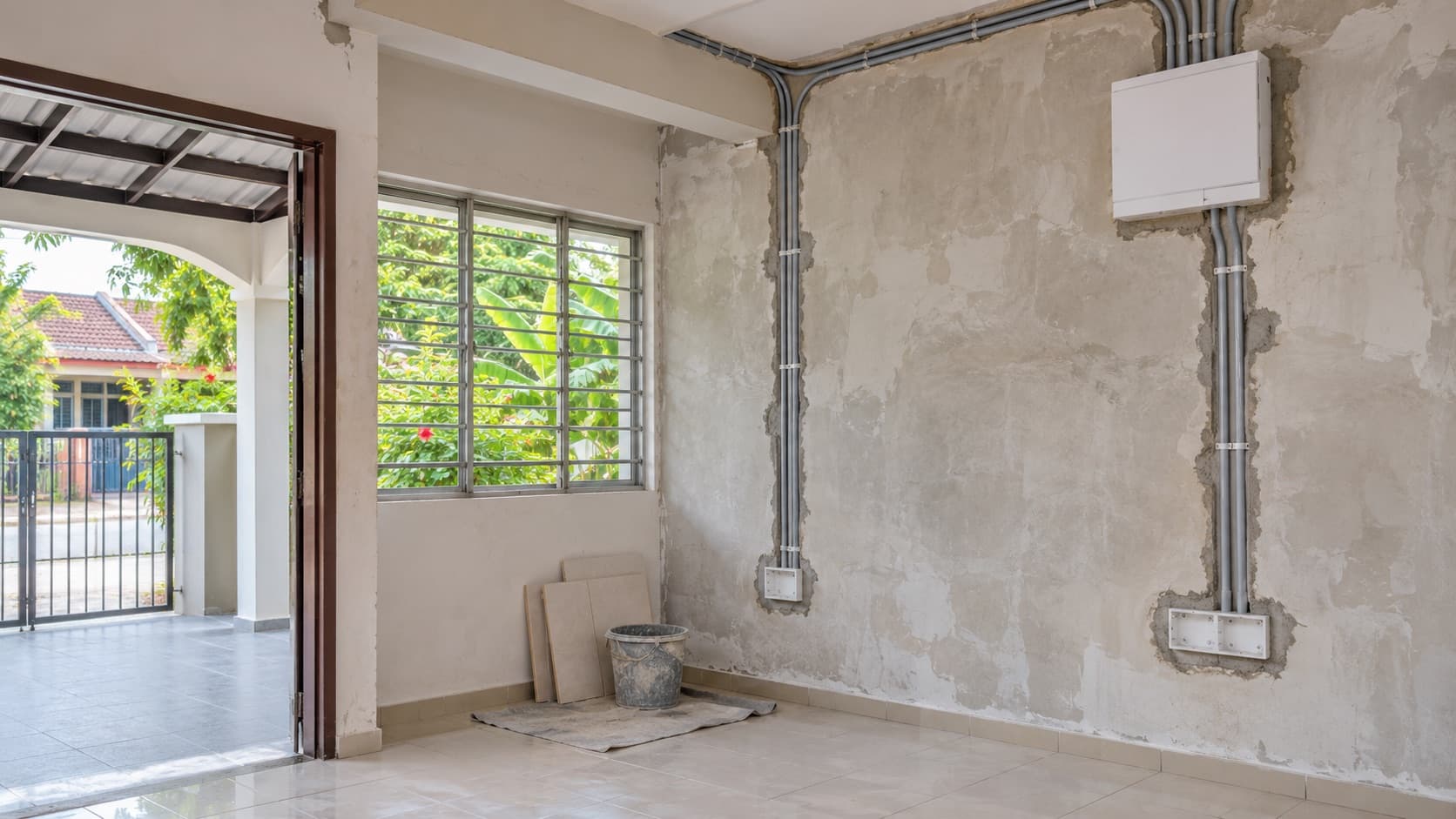
Planning electrical wiring in Malaysia? Before agreeing to a full rewire, get a registered electrical contractor to inspect and test the existing installation, explain what actually needs replacing, and put the scope and handover records in writing. The age of your house, a new socket faceplate or a photo of the distribution board cannot answer that question on its own.
An older terrace house may have wiring added by several previous owners. A newer condo may need extra circuits for an induction hob, oven or additional air conditioners rather than every cable replaced. The useful question is not simply "How much per point?" It is "What work makes this installation suitable for the way we will use it?"
These seven checks help you brief and compare electrical contractors in Malaysia. This is a homeowner planning guide, not a DIY wiring tutorial. TNB's safety advice explicitly says not to add wiring yourself and to hire a qualified electrical contractor.
1. Check Whether You Need Repairs, a Partial Rewire or a Full Rewire
Ask for an assessment before a replacement quote. A breaker that trips repeatedly needs investigation, but it does not by itself prove that every cable in the house has failed. TNB's RCCB guidance directs homeowners to a registered electrician or contractor to troubleshoot the affected wiring.
Tell the contractor about repeated tripping, burning smells, scorch marks, shocks or tingling from appliances, previous leaks, flooding and undocumented alterations. Stop using suspect equipment. If there is smoke or fire, leave the area and call emergency services; do not open the board, touch damaged fittings or keep resetting a tripping breaker.
Ask for three things in the assessment: what was inspected and tested, what defects were found, and which circuits can safely remain. If the recommendation is a full rewire, ask why a targeted repair or partial replacement is insufficient.
For a subsale home, request any existing circuit drawings, test records and alteration history from the seller. Missing records are a reason to investigate, not automatic proof that all wiring must go.
- •Repair: a specific defect is identified and the contractor confirms the surrounding installation is suitable to retain.
- •Partial rewire: named circuits or areas are replaced or added, with the retained wiring and its connection to the new work assessed.
- •Full rewire: the agreed installation is replaced; the quotation must still say whether the distribution board, earthing and accessories are included.
2. Check Electrical Registration, Not Just SSM or CIDB
A business registration, renovation portfolio or CIDB certificate is not a substitute for the electrical credentials needed for the job. Check the business doing the electrical work and the competent person responsible for supervision and testing, even when you hire through an interior designer or main contractor.
For Peninsular Malaysia and Labuan: use the Energy Commission's official register directory. It links separately to electrical contractors and electrical competent persons. Match the company name and registration details to the quotation, and verify current validity and scope rather than relying on a certificate screenshot. ST's installation guidance states that contractors and wiremen must hold valid credentials before carrying out installation work.
For Sabah: check with Energy Commission of Sabah, ECoS, which took over electricity regulation in Sabah on 3 January 2024. Do not confuse Sabah's ECoS with ST's ECOS online portal.
For Sarawak: follow the Ministry of Utility and Telecommunication's Electrical Installation Contractor guidance and verify the relevant EIU registration and scope. Do not assume the Peninsular registration process applies nationwide.
Ask: "Which registered business will do the electrical work, who will supervise and test it, and whose details will appear on the completion documents?" If the answer is only "our wiring guy," get the names before paying.
3. Check the Appliance Plan Before Counting Power Points
Bring a room-by-room plan and the specifications of the appliances you intend to install. The contractor needs to assess the load and circuit arrangement, not just count visible sockets.
In the kitchen, mark the oven, hob, hood, fridge, dishwasher and countertop appliances against the actual cabinet layout. In bedrooms, confirm air-conditioner locations, bedside sockets and desk positions. Include water heaters, laundry equipment, outdoor equipment and any planned EV charger in the brief.
Example: twelve new sockets do not mean twelve independent circuits. Several outlets may share a circuit. Ask which appliances need dedicated circuits and how the proposed arrangement accommodates appliances used at the same time. Leave cable sizes, protective-device ratings and circuit design to the qualified professional.
Rewiring and a supply upgrade are different jobs. If an upgrade is recommended, ask for the load assessment and separate utility-related scope. TNB's upgrade guidance describes the application through an ST-registered electrical contractor, with connection charges and deposits separate from internal wiring work.
If you are redesigning the kitchen too, settle the wet and dry kitchen layout before approving electrical point positions.
4. Check the Distribution Board, Earthing and Shock Protection
New cables and attractive switches are not the whole installation. Ask the contractor to assess the distribution board, earthing and protective devices as part of the job, and explain what will be retained, replaced and tested.
An MCB provides overcurrent protection; an RCD provides residual-current protection. An RCCB is one type of RCD, while an RCBO combines residual-current and overcurrent protection. Do not accept "there is already a breaker" as a complete explanation of protection against electric shock.
Bathrooms and water heaters deserve explicit attention. For ST-regulated installations, the ST water-heater guideline specifies a dedicated final circuit and RCD sensitivity of no more than 10 mA. Ask the contractor to confirm the required protection, earthing, isolation and equipment placement for the actual heater and location. Do not assume a heater's built-in safety feature replaces all installation-level protection.
A useful written answer names the proposed devices and their ratings, which circuits they protect, and how they will be tested. You do not need to design the system yourself. You do need a contractor who can explain the design and document the results. Never agree to bypass protection or fit a larger breaker merely to stop tripping without investigating the cause.
5. Check What the Wiring Quote Includes and Excludes
A price "per point" is meaningful only after the contractor defines a point. Does it include the cable run from the board, conduit or trunking, accessories, installation and testing? Is a double socket counted as one point or two? How are longer routes and dedicated circuits charged?
Compare quotations against the same marked-up layout and appliance list. A concealed route and surface trunking are not the same scope, and a quote retaining the old board cannot be compared directly with one replacing it.
There is no reliable all-home rewiring price without knowing the property, access, circuit scope and condition. Request site-assessed, itemised quotes rather than treating an online price range as a fixed tariff. Our renovation quotation guide explains how to compare inclusions rather than just totals.
- •List each point and circuit against a drawing, with quantities and agreed positions.
- •Specify cable and accessory brands or models, sizes and ratings selected by the contractor, and whether installation is concealed or surface-mounted.
- •Separate distribution-board work, protective devices, earthing and any supply-upgrade application or utility charges.
- •State who pays for wall chasing, patching, repainting, ceiling access, debris removal and protection of existing finishes.
- •Include inspection, testing, completion records, workmanship warranty terms and the process for approving extra work.
6. Check the Work Sequence, Access and Power-Off Plan
Agree on point positions and cable routes before cabinets, ceilings and finished surfaces block access. Schedule the concealed installation work and the relevant inspections or checks before closing it up; final testing also needs to cover the completed installation.
Ask who approves changes on site. A kitchen installer moving a tall cabinet can make an agreed socket inaccessible. An aircon contractor may need a route that clashes with a new ceiling. Put revisions on the same drawing rather than leaving different trades to follow different WhatsApp messages.
For a condo, obtain the building management's requirements for renovation approval, contractor access, permitted work hours and any work affecting common property. Do not assume a management approval authorises electrical work outside your own unit or changes to shared infrastructure.
If you will remain in the home, ask which areas will be unavailable, when power will be off, and how the contractor will keep the work area safe. Include refrigeration, working from home and any electrically powered medical equipment in your planning. Do not improvise temporary supplies yourself.
Use our full home renovation timeline to coordinate the electrical stages with other trades.
7. Check the Test Records Before Signing Off
A light turning on is a functional check, not proof that the installation is electrically safe. Before work starts, agree what inspection, testing and certification the contractor will provide for the scope, and who is qualified to sign it.
For TNB supply applications, the utility identifies Form G as the supervision and completion certificate and Form H as the test certificate. Its supply application guidance also explains the appointed contractor's responsibility to trace and test wiring and declare results to customers. Have the contractor confirm the documents applicable to your alteration or rewire; Sabah and Sarawak have their own regulatory processes.
Ask for recorded results covering the relevant safety checks, such as protective-conductor continuity, insulation resistance, polarity, earthing and residual-current protection. These are professional tests, not instructions for a homeowner with a multimeter.
Tie the agreed handover deliverables to the completion milestone in your contract. Our contractor payment schedule guide explains how to link payments to completed work.
- •Collect the applicable signed completion certificates and test results, identifying your property and the work covered.
- •Get an updated circuit schedule and clear board labels so each circuit can be identified without opening protective covers.
- •Keep the final point layout and safe progress photos taken before concealed routes are covered.
- •Record any retained circuits, outstanding defects and agreed rectification dates in writing.
- •Ask for a safe-operation and maintenance handover, warranty documents and the contact for reporting faults.
Final Thoughts
Before you sign a rewiring quote, you should know why the work is needed, who is qualified to do it, which circuits and fittings are included, and what records you will receive. If those answers are missing, a cheap price per point is not enough to make an informed decision.
Start by comparing electrical contractors in Malaysia, then give your shortlist the same layout, appliance list and handover requirements. You can also request quotes for your electrical work. Use the directory to find candidates, but verify electrical registration with the appropriate authority yourself before appointing anyone.
Frequently Asked Questions
Does an old house in Malaysia automatically need a full rewire?
No. Age and missing records are reasons for an inspection, not a diagnosis. Have a registered electrical contractor inspect and test the installation, identify defects and explain whether repairs, a partial rewire or a full rewire are appropriate.
How do I check whether an electrical contractor is registered?
For Peninsular Malaysia and Labuan, use ST's official register directory to check the electrical contractor and competent person. In Sabah, check with Energy Commission of Sabah, ECoS. In Sarawak, verify the relevant EIU registration through the Ministry of Utility and Telecommunication. Match current registration details and scope to the business doing your job.
How much does house rewiring cost in Malaysia?
There is no single price that covers every house. The cost depends on the circuits and points, retained wiring, cable routes, board and earthing work, access, testing and reinstatement. Ask for itemised quotes after a site assessment, and compare identical scopes rather than headline prices per point.
Can I add sockets myself or ask a general handyman?
Do not add wiring yourself. TNB advises homeowners to hire a qualified electrical contractor. If a renovation firm arranges the work, verify the electrical contractor and the competent person responsible rather than relying only on the firm's general renovation credentials.
Does rewiring mean I must upgrade to three-phase supply?
Not automatically. Replacing internal wiring and upgrading the incoming supply are separate decisions. Ask the contractor to assess your intended appliance loads and existing supply, explain whether an upgrade is needed, and separate internal works from utility application requirements and charges.
What are Form G and Form H?
In TNB supply application guidance, Form G is the supervision and completion certificate and Form H is the test certificate. Ask your contractor which completion and testing records apply to your specific rewire or alteration, and keep copies. Sabah and Sarawak use their own regulatory processes.
Related Articles

Ready to Start Your Project?
Get quotes from verified contractors, or browse reviews and transparent pricing on FindContractor.